Friday, 30 January 2015

Band Advert


Magazine adverts will usually have an image of either the band, the cover of the single/album or something related to the song.  It will then show the release date and where you will be able to purchase the songs, such as iTunes or HMV.  It will also show some ratings and comments from big magazines such as Q and NME.


Tuesday, 27 January 2015

Album Art Exercise


To get an idea on how I should make my digipak, I tried an album art exercise.

First I had to click a link which would take me to a random wikipedia page.  Whatever the title of the page was, i had to use as the name of the band or artist.  I ended up with Wolfe Video.

Secondly, I had to click a link that would take me to a quotes page.  I then had to choose the last 4 words of any quote which would then become the album title.  The best quote I could find was 'it should end there'.

Lastly, to make the album cover I needed an image to use.  I had to click a link that took me to a Flickr page of random images, where I then had to pick the third image.  my image was a bird eye's view of a city at night.  To edit the image I made it turn black and white but then brought back the colour of the road as that was the most colourful part of the image.  I then wrote the name of the artist and album name on the edited image. 


Friday, 23 January 2015

Digipak

What is a digipak?

Digipaks typically consist of a book-style paperboard or card stock outer binding, with one or more plastic trays capable of holding a CD or DVD attached to the inside. It means the CD comes in a cardboard flip-out case rather than a standard plastic hinged case.

Digipak-style packaging is often used for CD singles or special editions of CD albums and the tall DVD Digipak (DVDigipak) is used as a premium package for DVDs and DVD sets.

What is included in a Digipak?

  • Photographs / Pictures – usually at least one will be of the artist(s) and another might be of a scene that reflects the mood / genre of the record.


  • Track List including song writing credits.

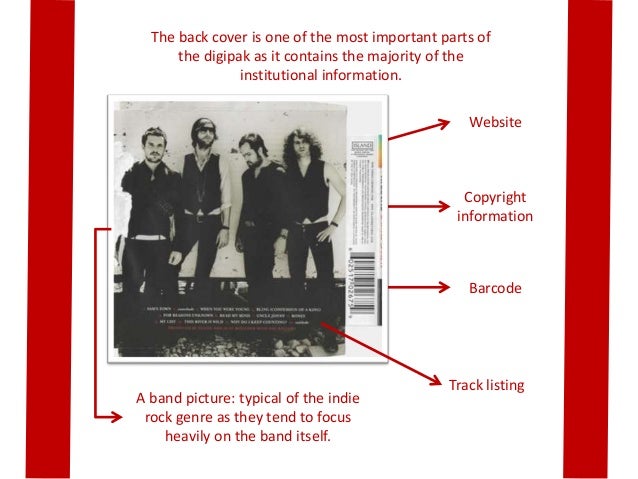
  • One box with a Disk impression (perhaps a circle over an innocuous background that shows where the disc will go or alternatively the design on the actual disc).

  • A Band/Artist information section (names, instruments, additional musicians, Copyright and year of release etc.)

  • Barcode and QR and a  Logo for the record company.

  • Possibly reference to other albums by the same artist(s).


Artist's Digipaks:


Arctic Monkeys


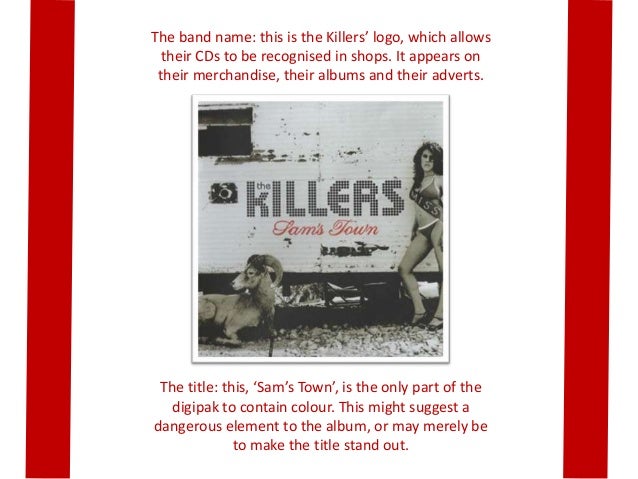
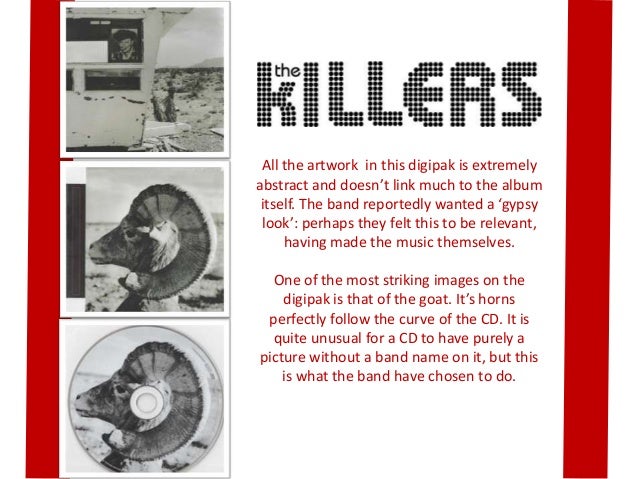
The Killers


Friday, 16 January 2015

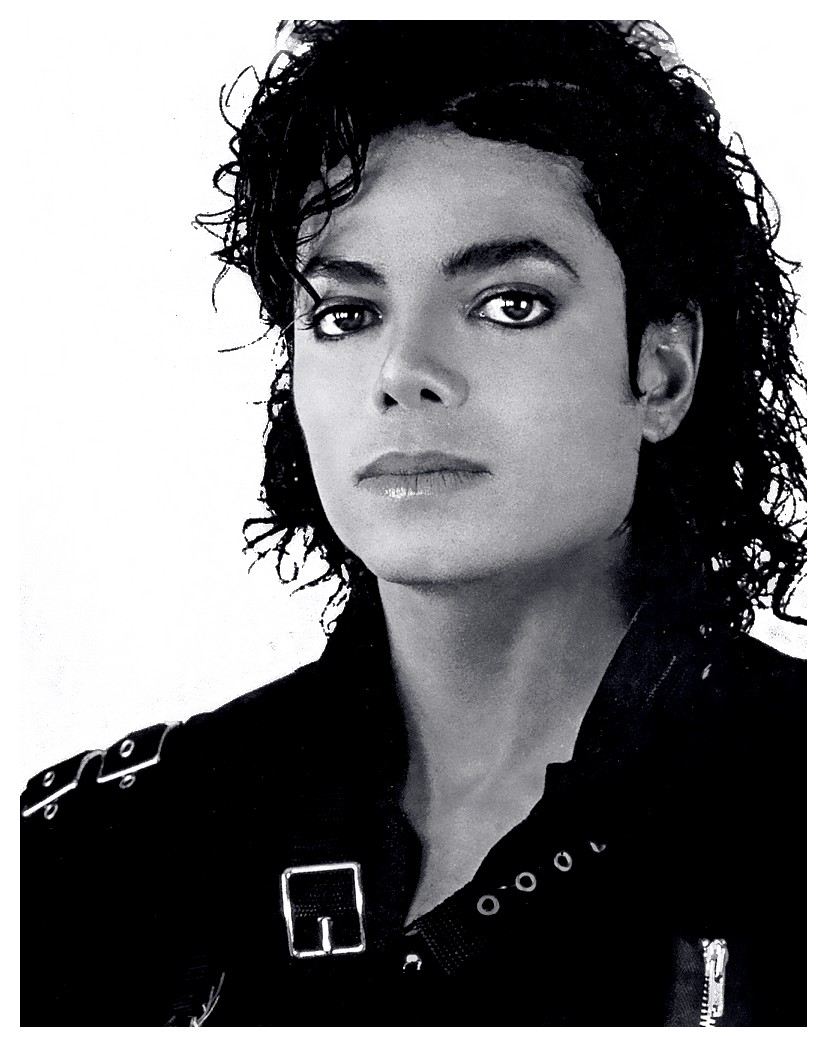
Michael Jackson


Michael Jackson was an American singer, songwriter, record producer, dancer, and actor. Called the King of Pop, his contributions to music and dance, along with his publicized personal life, made him a global figure in popular culture for over four decades. 

His career started when he was a part of his brother's group, 'Jackson 5'.  They had a number of hits including 'Rockin Robin', 'ABC' and 'I want you back'.

Their videos were very basic as they were just promoting the song.  There was limited sophistication but very good lip syncing.
                          

As Michael got older, he started  to have his own singing career as a solo artist.  His first big hit was 'Rock with you', which came out in 1979.  It's a very simple video which included a lot of lighting to make silhouettes.  His costume is very interesting because of how glittery it was.


In 1982, 'Billy Jean' was released.  This was a very interesting video that told a story and Michael does more than just lip synching as he includes his own dance moves throughout the video.  
                          

In 1983, Michael's music video for 'Thriller' was considered the most famous music video of all time.  It included elaborate choreography, costumes and dialogue.  The video was more like a miniature film than just a music video.  The long version of "Thriller" runs nearly 14 minutes, but had remarkable longevity, easily racking up over 100 million views when it showed up on YouTube. MTV usually ran the short version, which ran a little under five minutes but still contained about a minute of non-song content in a storyline that omits most of the movie the couple is watching at the beginning.  
The video cost about $500,000 to make. Jackson's record company had no intention of paying for it, since the album was on the downswing and they had already financed videos for two of its songs. According to John Landis (Director), Jackson really wanted to turn into a monster, so he offered to pay for the clip himself. Landis took on the project because he saw it as a way to revive the short film genre, which he loved.  

The video won for Best Performance Video, Best Choreography, and Viewers Choice at the first MTV Video Music Awards in 1984.

Most homes had Video Cassette Recorders in 1983 and sales of videos were big business. 
You could buy a VHS or beta copy of Michael Jackson's Thriller, which included the full video and also "The Making of Michael Jackson's Thriller," a behind the scenes documentary.


Change in actor

As we found that Tariq wasn't the best person to use for our music video, we made a short video showing his slight improvements.


Monday, 12 January 2015

Narrative Theory

Narrative is the way the story is organised.

Elements of narrative:
  • Time
  • Enigma- questions or problems that need to be answered
  • Closure- How the story ends, are there any loose ends at the end of the video?
  • Linear- when the story goes in chronological order and there are no flashbacks.
Todorov-

Equilibrium- Everything is normal, the environment can be relaxed.
Disruption- Something happens that disrupts the plot, e.g. a murder takes place
Resolution- The problems are fixed, e.g. revenge for the murder
New equilibrium- Everything has gone  back to normal however, it isn't the same as the beginning, e.g. the person murdered is no longer there

Barthes-

Open- numerous 'threads to pull' - Inception is good example of this as you aren't quite sure if the main character has died or is dreaming.
Closed- only one obvious thread to grasp - Many films have closed endings, where everything is resolved.

Texts that can be read in a number of ways are known as polysemic texts.  This is when a film can be open to many different interpretations.  For example, 'Scarface' can be seen as 'a glorification of violence' or 'a rags to riches' story.

Propp-
  1. Protagonist (the hero)                     Scott Pilgrim
  2. Antagonist (the villain)                    League of evil exes
  3. Provider (the donor)                       Ramona Flowers
  4. The helper                                      Scott's friends
  5. The father                                       Scott's ex
  6. The dispatcher                               Ramona Flowers
  7. The princess                                  Ramona Flowers
  8. The false hero                                

Stan:


Stan can be seen as based on a few of the above theories.

Todorov's theory can be applied as it has an equilibrium and disruption, however it does not exactly have a resolution and new equilibrium.  The beginning of the video shows how Stan has an obsession over Eminem and shows the disruption as his letter gets lost in the mail.  However, his problems only seem to get worse as he writes his new letter towards Eminem about how he never responds and this ends in Stan going slightly mental and driving off a bridge, killing both himself and his pregnant wife.  This shows that there is no resolution or new equilibrium.

Barthes' theory can be seen in the music video as there are some questions that pop up throughout the video.  However, as the video progresses, we see that these questions get answered.  These include 'Why does Eminem not receive Stan's letters?' or 'Why is Stan driving through the night in the rain?'  It is a closed piece of text as we see why everything happened, however there is no real resolution.

Propp's theory can also be applied to Stan, as there are some of the characters that he suggests.  There is the 'protagonist' who is Stan, however he isn't seen as a hero.  There are also the 'princess' (Stan's wife).  The villain is seen as Eminem through Stan's eyes, however, we see that he was not at fault for everything that had gone wrong.